General Liability
The Florida Contractor's Guide to Commercial General Liability Insurance
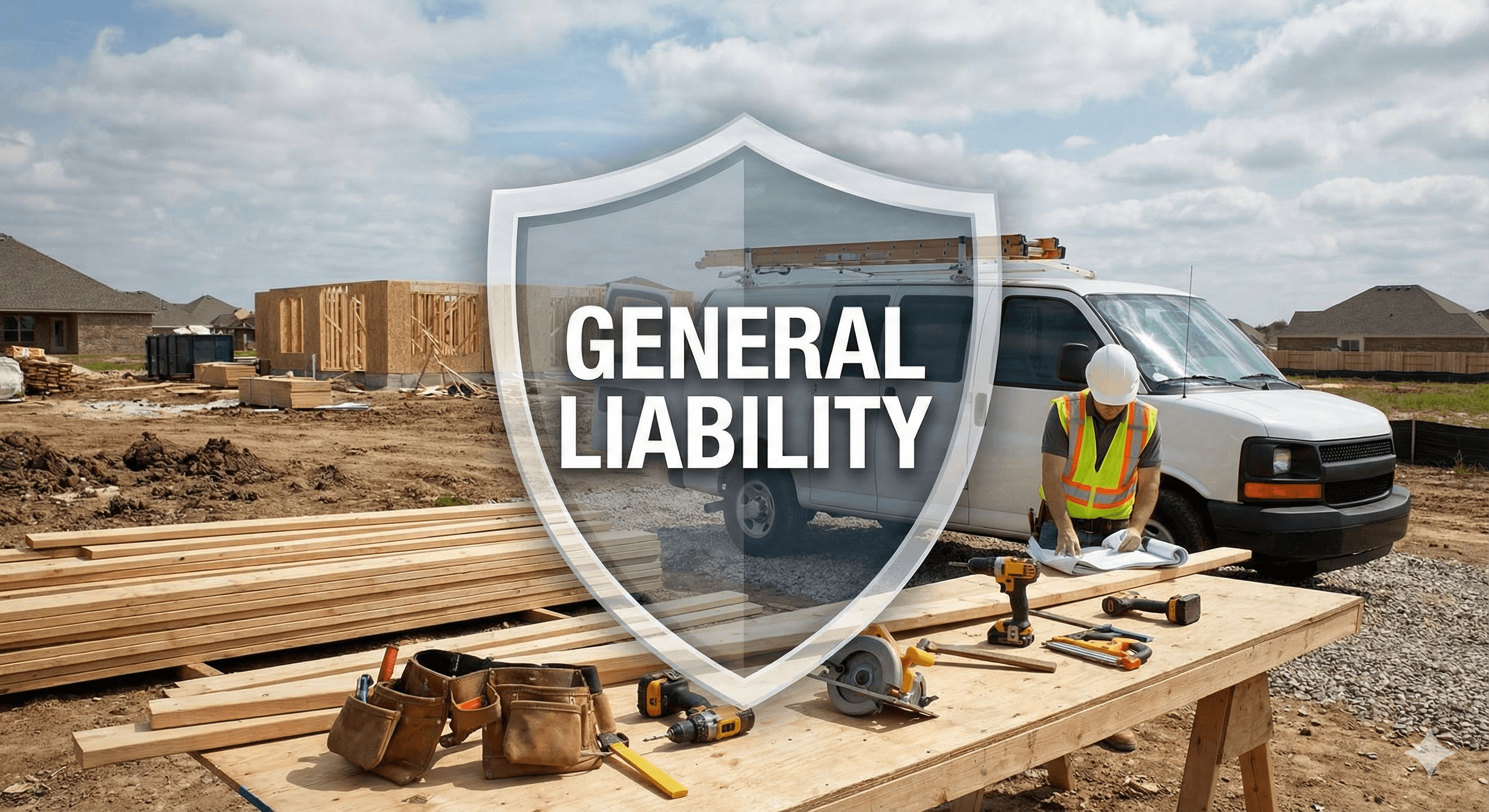
You know the story all too well as a Florida contractor: finishing up a job, feeling pretty good about the work, and then getting a call six months later saying there's water damage – or worse, someone got hurt on your site. What happens next is all down to the insurance coverage you sort out before you even start hammering in that first nail. Commercial General Liability insurance isn't just a certificate that gets handed over to get on a job – it's the foundation that protects your business, your assets, and your ability to keep working in Florida's tough construction environment.
Quick Reference: What You Need to Know as a Florida Contractor
Before we get into the details, here's the bottom line:
Topic
What You Need to Keep in Mind
What CGL covers
Bodily injury, property damage, and personal/advertising injury that results from your work or when it's done – and it's all about third-party risks
Standard limits
The baseline is $1 million per occurrence / $2 million aggregate, but many contracts will specify higher
Completed operations
Don't forget that claims can be made up to 10 years after work is finished – that's Florida's statute of repose
Common exclusions to watch
Water damage, mold, professional services, your own faulty work, pollution, and height/depth restrictions
Subcontractor requirements
Get additional insured status (CG 20 10 + CG 20 37), waiver of subrogation, and primary/non-contributory language
Claims-made vs. occurrence
Most contractor policies are occurrence-based – stick with occurrence for construction work
Key endorsements
Blanket additional insured, blanket waiver of subrogation, per project aggregate, primary and non-contributory
Policy interactions
Understand how your CGL coordinates with auto, workers' comp, umbrella, and builder's risk coverage
The bottom line: CGL should be at the top of your list. Whether you need to comply with certain requirements or not, you're taking on significant liability every time you step onto a jobsite. The question isn't whether you can work without it – it's whether you can afford to.
Why CGL Should Be Top of Your Priority List
Here's the reality for Florida contractors: Commercial General Liability insurance is there to protect you from third-party bodily injury and property damage claims that arise from your work. Every general contractor you work with requires it. Project owners need it. Lenders need it too. And most importantly, the risk you take on without it can close your business down overnight.
The practical reality: Whether or not you specifically need to have CGL as part of your license requirements, just about every meaningful construction contract in Florida will require it. You won't get on GC bid lists without it. You won't work on commercial projects without it. Property owners won't let you on their sites without it. The contractors who try to operate without adequate cover find themselves locked out of work that actually builds a business – or worse, they end up facing a claim that wipes out everything they've built.
Florida's construction environment is particularly challenging. The state's 10-year statute of repose for construction defect claims (F.S. 95.11(3)(c)) means claims can arise up to a decade after you've finished the job. The weather – hurricanes, heavy rainfall, humidity – accelerates building envelope failures and water-related damage. And Florida's legal environment has historically been active for construction litigation.
The state's Chapter 558 Right to Cure law affects how claims typically proceed. Before filing a construction defect lawsuit, claimants generally must provide written notice – 60 days for residential projects, 120 days for commercial – giving contractors a chance to inspect and remedy defects. If you get a 558 notice, that's the moment to get your insurance company on the phone. Getting them involved early in the cure process can make the difference between a manageable resolution and expensive litigation.
The plain truth: CGL insurance is foundational. Build your coverage program on solid footing, and you can focus on building your business.
Understanding the Core Coverages in Your Policy
A standard CGL policy generally covers several main areas. Understanding what each one does – and just as importantly, what it often doesn't – helps you spot where the gaps might be.
Coverage A: Bodily Injury and Property Damage
This is typically the heart of your CGL policy. Coverage A generally pays for damages you become legally obligated to pay because of bodily injury or property damage caused by an "occurrence" – insurance-speak for an accident.
Bodily injury typically means physical injury, sickness, disease, or death. For contractors, common scenarios might include a visitor tripping over exposed conduit and breaking an ankle, a bystander getting hit by falling debris, or a neighboring resident developing health issues from dust exposure.
Property damage typically means physical injury to tangible property or loss of use of property. Think of a torch sparking a fire that damages a client's building, heavy equipment rupturing an underground utility line on adjacent property, or a crane swing damaging a neighboring building.
The critical concept here is the "occurrence" requirement. Your CGL generally covers accidents and their consequences – not intentional acts. Here's where it gets nuanced for construction: faulty workmanship itself often isn't covered, but the resulting damage to other property may be. If a roofer installs shingles incorrectly, the policy typically won't pay to replace those shingles. But if water leaks through and damages the homeowner's ceilings, walls, and furniture, that resulting property damage may be covered under many policies.
Coverage B: Personal and Advertising Injury
This coverage typically handles non-physical harm claims like libel, slander, false arrest, wrongful eviction, and certain advertising-related offenses. While less common for contractors than bodily injury claims, situations can arise – publicly making false statements about a competitor's work quality, inadvertently using copyrighted material in marketing, or making accusations against subcontractors that cross into defamation territory.
Products-Completed Operations Coverage Is Critical for Construction
Here's where Florida contractors need to pay close attention. Completed operations coverage generally responds to claims arising from work after it's been finished or abandoned. Given Florida's climate and the 10-year statute of repose, this coverage is arguably among the most important protections for contractors.
The scenario plays out regularly: You complete a project in 2024. In 2027, a leak develops that causes extensive interior damage. Without completed operations coverage in effect, that claim may have no coverage to respond. With it, your policy from the time of the occurrence may respond.
Think carefully before letting your CGL policy lapse, even if you're winding down operations. If you retire or close your business, that completed operations exposure from past projects doesn't just disappear – it can linger for years. Many construction contracts now require contractors to maintain completed operations coverage for 3-5 years after project completion, and some push that to match the full 10-year repose period.
Medical Payments Coverage
Often called "med pay," this no-fault coverage typically pays medical expenses for third parties injured in connection with your operations regardless of who's at fault. Common limits run $5,000-$15,000 per person. It can serve as a goodwill tool – when a delivery driver sprains an ankle on your site, paying their medical bills quickly through med pay may help prevent a minor incident from becoming expensive litigation.
Damage to Rented Premises (Fire Legal Liability)
Your CGL policy generally excludes damage to property in your care, custody, or control. Fire legal liability typically carves out an exception for fire damage to premises you rent or temporarily occupy. Standard limits often run $100,000-$300,000, though commercial landlords increasingly require $300,000-$500,000 or more. Review your lease agreements and confirm your coverage aligns.
Coverage Gaps That Catch Florida Contractors Off Guard
Understanding what your CGL policy may exclude or limit is often more important than knowing what it covers. Here's where contractors commonly run into problems.
The "Your Work" Exclusion
Many CGL policies exclude damage to your own work arising from that work. The policy may view repairing your own defective workmanship as a business risk rather than an insurable accident. If your HVAC installation fails, the cost to fix the installation often isn't covered.
The subcontractor exception is important for GCs: this exclusion typically doesn't apply when the damaged work was performed by a subcontractor. If your drywall sub's defective work causes problems that damage another sub's finishes, your CGL may cover the damage because a subcontractor performed the faulty work. This exception is one reason proper subcontractor insurance requirements matter so much.
Water Intrusion and Mold Exclusions Hit Florida Contractors Hard
Given Florida's climate, these exclusions can be among the most significant for local contractors. Many CGL policies contain endorsements that may exclude or limit:
- Property damage from water intrusion, seepage, or moisture infiltration
- Bodily injury or property damage arising from mold, fungi, or bacteria
- Costs to remediate mold regardless of cause
A roof repair that leads to leaks and mold growth can quickly generate a claim where only part – or none – may be covered. Some insurers offer mold sub-limits (often $25,000-$50,000), but that may be inadequate for serious claims. Review your policy's specific language around water and mold carefully.
Construction Defect Exclusions and Residential Limitations
Some Florida insurers have added broader construction defect exclusions that go beyond standard policy language, particularly for residential work. These may exclude or limit:
- Damage arising from defective construction regardless of who performed the work
- Claims for diminished property value due to construction defects
- Certain types of construction (condominiums, tract housing, multi-family)
Many national insurers have pulled back from Florida residential construction due to claims frequency. Contractors in this space may need to work with Florida-domiciled or surplus lines carriers who understand the local market.
Height and Depth Limitations Can Restrict Specialized Work
Many policies contain exclusions or limitations for work above certain heights (commonly 15, 25, or 40 feet) or below certain depths (typically 5-15 feet). Roofing contractors, exterior painters, and sign installers should verify their height coverage. Foundation, utility, and pool contractors should confirm depth limitations.
If your policy excludes work above 25 feet and you're replacing roof flashing at 30 feet when an incident occurs, coverage may not apply – potentially not for defense costs, not for damages.
Hot Work Exclusions Can Affect Welding and Cutting Operations
Operations involving welding, torch cutting, brazing, and similar heat-producing work are commonly excluded or limited in standard policies. A fire sparked by welding that damages adjacent property could potentially be uninsured. Coverage for hot work may be available by endorsement, typically requiring fire watch protocols and documented safety procedures.
The Professional Liability Gap Affects Design-Build Contractors
Standard CGL policies typically exclude professional services – design, engineering, architecture, or professional consulting. This can create significant exposure for design-build contractors, those performing value engineering, or anyone providing construction management services.
If you design an HVAC system that doesn't meet performance requirements, or your value engineering recommendation leads to failures, that may be characterized as a professional liability claim. Standard CGL often won't respond. Contractors Professional Liability (CPrL) is a separate policy specifically designed to address these exposures.
Care, Custody, and Control Exclusion Impacts Renovation Work
Your CGL generally excludes damage to property in your care, custody, or control. For renovation contractors, this can be a significant gap – you're working on and around the owner's existing property constantly. Damage to existing structures, fixtures, or contents during renovation may not be covered by your CGL.
Solutions may include Installation Floater policies, Builder's Risk with renovation coverage, or Property of Others endorsements. Contract language allocating insurance responsibility between owner and contractor also matters here.
How Subcontractor Insurance Requirements Actually Work
For general contractors, properly managing subcontractor insurance is one of the most important risk management activities you can do. For subcontractors, understanding what you're being asked to provide – and why – helps you build it into your pricing and avoid compliance headaches.
Additional Insured Status Explained
When you're named as an additional insured on a subcontractor's policy, you may gain access to their coverage for claims arising from their work. If the sub's installation causes damage and you get sued, you can potentially tap into their insurance policy for defense and damages – without touching your own policy limits.
Two endorsement forms are commonly used:
- CG 20 10 generally provides additional insured status for ongoing operations (during construction)
- CG 20 37 typically extends coverage to completed operations (after work is done)
You generally need both. A roofing sub finishes in June; in September a leak causes damage. Without CG 20 37, the additional insured coverage may have ended when work was completed. That claim could hit your policy instead of theirs.
Blanket additional insured endorsements (CG 20 33 for ongoing operations, CG 20 38 for completed operations) typically automatically extend coverage to anyone the sub is contractually required to add. This simplifies administration but generally still requires a written contract with the additional insured requirement.
One critical detail: verify the edition date of these endorsements. The 2004 versions use broader "arising out of" language. Post-2013 versions often use narrower "caused by" language that may provide the additional insured less coverage. Understanding which version is on the policy matters.
Certificates of Insurance Aren't What You Think They Are
A Certificate of Insurance is a snapshot showing coverage exists at a point in time. It's an informational document – not a guarantee of coverage.
The ACORD form itself typically states: "This certificate does not amend, extend, or alter the coverage afforded by the policies below." Being listed as a "certificate holder" generally gives you notification rights if the policy cancels. It typically gives you no coverage rights.
Being listed as "additional insured" in the description box is necessary but often not sufficient – the actual endorsement must be attached to the sub's policy. Certificates can potentially be fraudulent, policies can lapse after issuance, and the endorsements noted on the certificate may never have been added to the actual policy.
Practices that can strengthen coverage verification:
- Request copies of actual endorsements, not just certificates
- Verify coverage directly with the carrier when possible
- Consider third-party certificate tracking services for larger operations
- Collect new certificates at renewal – don't assume policies auto-renew
- Build insurance verification into your subcontractor prequalification process
Waiver of Subrogation Can Prevent Insurance Company Lawsuits
Subrogation is an insurer's right to pursue recovery from the party responsible for a loss after paying a claim. Without a waiver, here's what can happen: Your sub's employee gets hurt, their workers' comp carrier pays $200,000, then that carrier sues you to recover the money.
A waiver of subrogation endorsement (CG 24 04 for liability, WC 00 03 13 for workers' comp) typically means the sub's insurer agrees to waive those recovery rights against specified parties. The waiver generally must be in place before the loss occurs – you typically can't add it after an incident and have it apply retroactively.
Primary and Non-Contributory Language Can Protect Your Policy
Without this language, insurance companies might argue that policies should share losses or that the upper-tier party's policy should contribute. "Primary" generally means the sub's policy responds first. "Non-contributory" typically means it pays without requiring contribution from your coverage.
The practical effect: Claims arising from a sub's work may go against their policy first. Your policy limits may stay intact. Your claims history may not be affected. Your premiums may not increase based on that claim.
The endorsement for this is typically CG 20 01, though some carriers include this language within their additional insured endorsements. Most sophisticated contracts require the full package: additional insured + waiver of subrogation + primary and non-contributory.
What Happens When a Sub Is Uninsured or Underinsured
When an uninsured sub causes damage or injury, claims typically flow upward to the GC. You may have no insurance to tap, so your own policy could respond – potentially impacting your claims history, consuming your limits, and possibly exposing your personal assets if limits are exhausted.
Underinsured subs create a different problem. If the sub carries $500,000 limits and causes $2 million in damage, their policy may pay out and exhaust. You could be left with a $1.5 million gap – potentially hitting your policy or coming straight from your company.
Contract provisions that may help protect you:
- Specify exact coverage types and limits required
- Include right to withhold payment if insurance lapses
- Require the sub to maintain coverage throughout the project and completed operations period
- Flow requirements down to lower-tier subs – make your sub responsible for ensuring their subs are properly insured
Florida-Specific Subcontractor Considerations
Florida's workers' compensation rules are particularly important. In construction, if you have one or more employees, you generally need workers' comp coverage – there's no four-employee minimum like some other industries. Corporate officers may be able to exempt themselves (with limitations), but the exemption certificate typically must be on file with the state.
The statutory employer doctrine can create exposure: if a sub lacks workers' comp and their employee gets injured, the GC's workers' comp policy may be required to cover that worker. Verify workers' comp coverage or exemption certificates through Florida's online database at myfloridacfo.com – don't just accept a certificate at face value.
Florida Statute 725.06 limits indemnification provisions in construction contracts. You generally cannot require indemnification for your own sole negligence, and indemnification must typically be backed by insurance to the extent of available coverage.
Claims-Made Versus Occurrence Policies
The vast majority of contractor CGL policies are occurrence-based, and there's good reason for that in construction.
Occurrence policies generally trigger coverage when the bodily injury or property damage occurs, regardless of when the claim is filed. You install faulty wiring in 2024 that causes a fire in 2028 – the 2024 policy may respond even though it expired years ago.
Claims-made policies generally trigger coverage when the claim is first made and reported during the policy period. Using the same example, only your 2028 policy would respond (if active), and typically only if the incident occurred after your retroactive date.
For construction, occurrence policies often make more sense because of long-tail claims exposure. Construction defects can remain latent for years – water intrusion, structural settlement, foundation problems. Florida's 10-year statute of repose means claims can arise a decade after project completion. Occurrence policies may provide built-in protection without requiring tail coverage purchases when you switch carriers or retire.
If you do have claims-made coverage (more common for professional liability), understand these concepts:
- Retroactive date: The earliest date from which incidents may be covered. Claims from incidents before this date are typically excluded.
- Tail coverage / Extended Reporting Period: Extends the time to report claims after a policy ends. If you retire or switch carriers, tail coverage may help maintain protection for past work.
- Continuous coverage: Gaps in claims-made coverage can potentially leave prior work unprotected.
Understanding Your Liability Limits
The Standard $1M/$2M Structure
Most contractor CGL policies use this framework:
- $1,000,000 per occurrence: Maximum payout for any single accident or incident
- $2,000,000 general aggregate: Maximum total payout for the policy period across all claims
- $2,000,000 products-completed operations aggregate: Separate aggregate specifically for claims arising from completed work
The products-completed operations aggregate being separate from the general aggregate is important – claims against completed work typically don't reduce the limits available for your ongoing operations.
When You May Need Higher Limits
Contract requirements typically drive limit decisions. Large commercial GCs commonly require $2 million per occurrence from subcontractors. Infrastructure projects, institutional owners, and public work may require $5-10 million in total coverage capacity.
Factors that often affect limit needs include:
- Project size and complexity
- Type of work (excavation, roofing, and crane operations often carry higher risk profiles)
- Location (urban areas typically mean more exposure to adjacent properties and pedestrians)
- Personal asset exposure (closely-held company owners may face personal liability if corporate protections are pierced)
Per Project Aggregate Endorsement
Standard CGL typically applies the aggregate across all your projects combined. A contractor with a $2 million aggregate working ten projects simultaneously has $2 million shared across everything. One major claim could exhaust coverage, potentially leaving other projects without adequate protection.
CG 25 03 (Designated Construction Project General Aggregate Limit) can create a separate aggregate for each project. Each job may get its own limit. Claims on Project A may not reduce limits available for Project B.
For contractors running multiple significant projects, this endorsement is often essential. Many GC contracts require it.
Umbrella and Excess Liability
When contract requirements exceed your primary CGL limits, umbrella or excess liability can fill the gap.
Excess liability generally follows the same coverage as your underlying policies – it adds limits but typically not additional coverage. Umbrella liability may be broader, potentially covering some claims your primary policies exclude, and may "drop down" to cover claims where underlying coverage is exhausted or doesn't apply.
Typical umbrella limits for contractors vary widely:
- Small residential contractors: $1-2 million
- Mid-size commercial contractors: $2-5 million
- Large general contractors: $5-25 million
- Heavy civil/infrastructure: $10-50+ million
How Your CGL Interacts with Other Policies
Understanding how multiple insurance policies coordinate is critical for avoiding gaps and disputes when claims arise. Here's how CGL typically interacts with other coverages in your program.
"Other Insurance" Clauses Create Coordination Rules
Most insurance policies contain "other insurance" clauses that determine how coverage applies when multiple policies could respond to the same claim. Common approaches include:
- Primary: The policy pays first, regardless of other coverage
- Excess/Contingent: The policy pays only after other applicable insurance is exhausted
- Pro rata/Contribution: Multiple policies share the loss proportionally
When your CGL and a subcontractor's CGL both potentially cover a claim, these clauses determine which responds first. The primary and non-contributory endorsement discussed earlier essentially modifies the "other insurance" clause to establish clear priority.
CGL and Commercial Auto Policy Interaction
Your CGL typically excludes liability arising from the ownership, maintenance, or use of automobiles. That's what your Commercial Auto Policy (BAP) covers. However, the line can blur:
- Loading and unloading: Injuries during loading/unloading may be covered by either policy depending on circumstances
- Mobile equipment: Some equipment may qualify as "mobile equipment" under CGL rather than "auto" under BAP
- Hired and non-owned auto: Coverage gaps can exist if employees use personal vehicles for work
Make sure your CGL and auto policies don't have conflicting exclusions that create gaps, particularly around loading/unloading operations and mobile equipment definitions.
CGL and Workers' Compensation
Your CGL generally excludes bodily injury to your own employees – that's workers' compensation territory. However, several scenarios involve both coverages:
- Third-party-over claims: An injured employee collects workers' comp, then sues a third party, who sues you for contribution. Your CGL may need to respond.
- Dual capacity: In rare situations, an employer may be sued as both employer (workers' comp) and in another capacity (CGL)
- Subcontractor employees: If you're sued for injury to a sub's employee, your CGL typically responds (it's not your employee)
The action over exclusion in some CGL policies can create gaps in third-party-over situations. Understand whether your policy contains this exclusion and consider endorsements that may modify it.
CGL and Builder's Risk
Builder's Risk covers physical damage to the structure under construction. CGL covers your liability for damage to third-party property. They typically don't overlap, but coordination matters:
- Damage to the project itself: Generally Builder's Risk territory
- Damage to adjacent property from your operations: Generally CGL territory
- Damage to owner's existing property during renovation: May fall between both policies – review carefully
Builder's Risk policies typically include waivers of subrogation among project parties, preventing the property insurer from pursuing contractors after paying a claim. Confirm these waivers align with your contractual requirements.
CGL and Umbrella/Excess
Your umbrella typically sits above your CGL, auto, and employers liability (the liability portion of workers' comp). Key coordination issues:
- Scheduled underlying insurance: Verify your umbrella lists all underlying policies
- Coverage gaps: Some umbrellas are "following form" (same coverage as underlying), others are broader
- Self-insured retention: If underlying coverage doesn't apply, you may owe a retention before umbrella responds
- Defense costs: Understand whether defense costs are inside or outside the limit
When a claim exhausts your primary CGL, you want the umbrella to pick up seamlessly. Gaps in underlying coverage or scheduling errors can leave you exposed.
CGL and Contractors Professional Liability
These typically don't overlap – CGL excludes professional services, CPrL covers them. However, some claims involve both:
- Hybrid claims: A design error (CPrL) causes property damage (potentially CGL)
- Allocation disputes: Insurers may argue about which policy responds to mixed claims
Consider whether you need a CPrL policy based on the services you provide. Design-build contractors, construction managers, and anyone providing design recommendations should evaluate this exposure carefully.
CGL and Pollution Liability
Standard CGL typically contains broad pollution exclusions. Environmental/pollution liability is generally a separate coverage. However:
- Limited pollution coverage: Some CGL endorsements provide narrow pollution coverage (typically hostile fire or sudden/accidental releases)
- Contractors pollution liability (CPL): Separate policy for contractors with environmental exposure
- Coordination: Understand which scenarios your CGL may cover vs. those requiring separate pollution coverage
Contractors doing any environmental work, tank removal, or work around known contamination should review pollution coverage carefully.
Essential Endorsements for Florida Contractors
Beyond the standard policy, certain endorsements are commonly required for contractors working on significant projects in Florida.
Blanket Additional Insured (CG 20 33, CG 20 38, or equivalent): Typically automatically extends coverage to parties required by contract without individual endorsements per project.
Blanket Waiver of Subrogation (CG 24 04): Generally prevents your insurer from pursuing recovery against project partners across all your contracts.
Primary and Non-Contributory (CG 20 01): Typically ensures your policy responds first when coordination with other policies is required.
Per Project Aggregate (CG 25 03): Can create separate limits for each project rather than one pool across all work.
Action Over exclusion modification: May address gaps when an injured employee sues a third party who then sues you for contribution.
For contractors providing any design services, Contractors Professional Liability is separate but may be essential – your CGL's professional services exclusion can create uninsured exposure otherwise.
Real-World Claims Scenarios
Site Injury with Proper Coverage
A pedestrian is struck by material falling from an upper floor. Serious injuries result. The contractor's premises/operations coverage may provide defense and pay damages up to policy limits. With adequate limits and umbrella coverage, the contractor's business can survive intact.
Completed Operations Claim Years Later
Three years after completing a roofing project, leaks cause $150,000 in inventory damage. The contractor maintained completed operations coverage. The policy from the time of the occurrence may respond, covering the property damage to the owner's inventory (though typically not the cost to repair the defective roofing work itself).
Subcontractor Failure Without Proper Verification
A GC allows an underinsured electrical sub to work on a project. The sub causes a fire resulting in $3 million in damages. The sub's $1 million policy pays out and exhausts. The GC may now face a $2 million gap – potentially from their own policy or their own assets.
Professional Services Gap
A design-build contractor provides HVAC design that doesn't meet energy efficiency specifications. The owner suffers excessive utility costs. The contractor's CGL may deny the claim – characterizing it as professional liability, not property damage. Without CPrL coverage, the contractor could pay the entire claim from company resources.
Policy Coordination Failure
A contractor's employee is injured, collects workers' comp, then sues a subcontractor. The sub settles and seeks contribution from the GC. The GC's CGL contains an action over exclusion, and the claim falls into a gap between workers' comp and CGL. Proper endorsements could have addressed this exposure.
Building Adequate Protection for Your Florida Contracting Business
CGL insurance isn't a commodity to buy at the lowest price – it's the foundation protecting everything you've built. The cheapest policy often has the most exclusions, lowest limits, and least contractor-friendly endorsements. When claims hit, those savings evaporate quickly.
Work with an insurance professional who understands construction. Review your policy annually as your business evolves. Read your exclusions – don't just file the policy away. Verify subcontractor coverage seriously, not just ceremonially. And remember that Florida's climate, legal environment, and construction market create exposures that generic national approaches may not adequately address.
The contractors who thrive long-term in Florida aren't just good builders – they're good at protecting themselves from the incidents that come with putting work in the field. Your CGL program is a core part of that protection.
Conclusion
Commercial General Liability insurance forms the backbone of risk management for Florida contractors, but the standard policy alone rarely provides complete protection. Coverage gaps in water intrusion, mold, professional services, and completed operations represent significant exposure in Florida's climate and legal environment. Proper subcontractor insurance management – verified additional insured endorsements, waivers of subrogation, and primary and non-contributory language – can help transfer risk appropriately down the construction chain.
The contractors who avoid catastrophic uninsured claims aren't lucky – they're deliberate. They carry adequate limits matched to their project size and contract requirements. They maintain completed operations coverage for years after finishing work. They verify subcontractor insurance rather than just collecting certificates. They understand how their policies interact with each other. And they understand what their policies cover before claims arise, not after.
Florida's 10-year statute of repose, active construction defect litigation environment, and extreme weather exposure make comprehensive CGL coverage more important here than in most states. The cost of proper coverage is part of doing business. The cost of inadequate coverage can be the business itself.
This article is provided for educational purposes and general information only. It does not constitute legal or insurance advice. Coverage terms, conditions, exclusions, and availability vary by carrier, policy form, and individual circumstances. Consult with a licensed insurance professional and legal counsel regarding your specific situation and coverage needs.